
Aloan for SBA lending
AI SBA loan underwriting software
Aloan is the AI tool for SBA loan underwriting, built for community-bank 7(a), 504, and Express teams to compress file preparation while the lender keeps SOP 50 10 8 interpretation and the approval. It classifies the package, spreads the borrower and every guarantor with K-1 tracing across affiliates, and keeps eligibility, collateral, environmental, and franchise support visible in one file. Multi-guarantor 7(a) files that routinely burn a full day of senior-analyst time on manual spreading and affiliate mapping arrive at credit committee source-cited and reviewable in the same week the package lands.
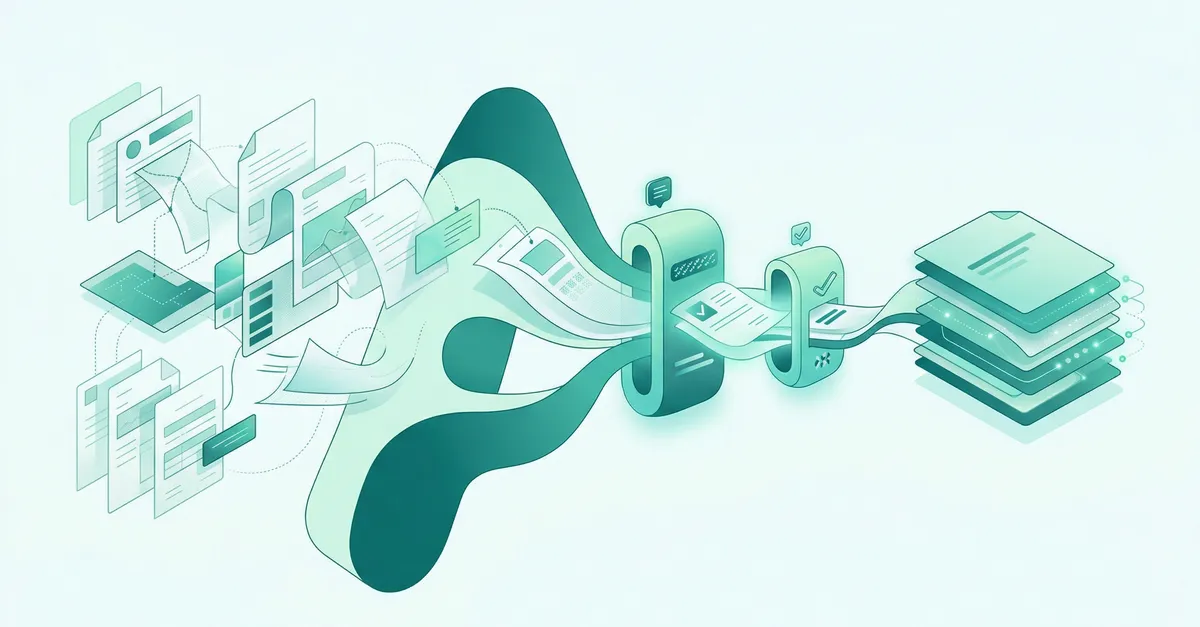
An SBA file breaks when the support lives in five places
Borrower, guarantor, affiliate, franchise, and environmental support each arrive on their own schedule and in their own format. All of that is file work, and it runs out the analyst's day before the real credit judgment starts.
SOP 50 10 8 is a file discipline. The lender has to support eligibility, show credit is not available elsewhere on reasonable terms, document repayment from business cash flow, and keep collateral, guarantor, and exception analysis coherent enough to survive review later. That falls apart when the pieces live in separate notes, threads, and spreadsheets. For the broader operating model, see the AI-assisted underwriting playbook.
Aloan pulls the package back into one reviewable file before the credit memo drifts from the exhibits. The lender keeps eligibility and the decision. Aloan takes the file-assembly work off the analyst.
Where an SBA file gets hard
The six places SBA underwriting slows down
These are the most repetitive steps, the easiest to validate on closed files, and the steps Aloan takes off the analyst.
Mixed document packages
Borrower and guarantor documents land together: partial uploads, stale personal financial statements, and tax returns that reference entities nobody requested up front.
Borrower, guarantor, and affiliate graph
Who owns the borrower, which outside entities matter to repayment, which K-1s tie to which guarantor, and whether the personal support is real.
Eligibility and credit elsewhere
The file has to support eligibility and the certification that credit is not available elsewhere on reasonable terms. That support tends to live in separate places and stop tying cleanly.
Repayment from business cash flow
SOP 50 10 8 is explicit that business cash flow is the primary repayment source. Gathering three years of returns, an interim, and a current debt schedule eats the day before analysis starts.
Collateral and environmental
On real-estate-heavy files, environmental reports and follow-up conditions sit outside the main packet until they turn into a closing problem.
Franchise documentation
After the 2023 affiliation rule change, franchise agreements no longer need control review, but the lender still has to capture franchise-related credit information.
Core SBA workflow
How Aloan runs a 7(a), 504, or Express file
Aloan does the document and spreading work and cites it. Eligibility and approval stay with the lender.
Document intake and package control
Aloan reads the upload, identifies what each document is, assigns it to the right entity, guarantor, and tax year, and flags what is still missing. SBA teams lose hours sorting partial uploads, stale personal financial statements, and returns that reference entities nobody asked for. Aloan does that inventory before underwriting starts.
The intake layer feeds straight into spreading and memo prep. For the upstream piece, see AI document collection for commercial lending.
Borrower, guarantor, and affiliate spreading with K-1 tracing
Aloan spreads the borrower and related entities consistently, matches guarantor returns and personal financial statements to the right people, and traces K-1s across affiliates so the ownership and guarantor map stays visible through the file. SBA underwriting is rarely one borrower spread and done.
The closest adjacent workflow is global cash flow analysis, where affiliate income and debt roll into a consolidated view the underwriter can rely on.
Collateral, environmental, and franchise support kept visible
A plain PDF reader will happily pull a number off the wrong guarantor's return. Keeping the packet tied to the right entity is the actual work. Aloan keeps collateral, environmental, and franchise items tied to the rest of the file: it surfaces environmental reports and property conditions, flags incomplete franchise support, and flags debt refinance detail that does not reconcile.
Aloan keeps those items visible and in context. Your lender makes the SOP interpretation and the credit call once the file stops hiding its weak spots.
Credit memo assembly with traceability
SBA memos fail when the narrative outruns the exhibits. Aloan assembles the factual layer: spreads, debt summaries, guarantor support, exceptions, and source citations, so the spread, the narrative, and the guarantor package agree.
That is the logic behind AI credit memo generation for SBA loans. Aloan pulls the support together. Your lender writes the judgment.
Manual SBA file prep vs. Aloan
| Step | Manual workflow | With Aloan |
|---|---|---|
| Document intake | Analyst sorts partial uploads and stale documents by hand | Classified by entity, guarantor, and tax year, with missing items flagged |
| Spreading | Each entity spread separately, add-backs vary by analyst | Borrower and affiliates spread consistently with K-1 tracing |
| Guarantor and affiliate map | Reconstructed from returns and PFSs by memory | Ownership and guarantor relationships mapped and kept visible |
| Collateral and environmental | Reports surface late, often near closing | Flagged in context against collateral value and marketability |
| Franchise support | Easy to overlook after the 2023 rule change | Franchise-related credit items flagged for review |
| Credit memo | Narrative drifts from the exhibits | Factual layer assembled with citations; lender writes the judgment |
| Examiner review | Analysis steps reconstructed by hand | Source traceability and overrides sit in the file |
Examiner view
Keeping AI-assisted SBA files examiner-ready
Examiners care about traceability, human decision authority, and a record of how the tool was used. An AI-assisted SBA file holds up when every figure, ratio, and exception cites back to the source document and page, and when eligibility and the credit call stay with a person.
The guidance to write to is OCC Bulletin 2026-13 and SR 26-2, which carry forward the model-risk disciplines popularized by SR 11-7: validation, monitoring, and vendor oversight. The practical takeaway for an SBA shop is the same either way. Keep the analysis tied to source, preserve overrides, and keep the decision with the lender.
Can you trace every spread figure, ratio, and exception back to the source return, statement, or guarantor document?
Is the eligibility and credit-elsewhere support assembled in one place, or scattered across analyst notes and inbox threads?
Are add-back decisions and human overrides preserved with attribution and timestamps?
Does the same intake, spreading, and guarantor standard apply across the SBA portfolio, regardless of who worked the file?
Go deeper: the examiner readiness guide covers the decision authority matrix and the governance questions most lenders answer before expanding AI usage in SBA underwriting.
Reference
What SOP 50 10 8 expects, and how the programs differ
Read SOP 50 10 8 like an underwriter, not section by section: what must be true, and what has to be in the file to prove it? Five workstreams carry most of the weight.
| Workstream | What the lender has to support |
|---|---|
| Eligibility and credit elsewhere | The applicant is eligible, and the file supports the certification that the requested credit is not available on reasonable terms without SBA support. |
| Repayment ability | Business cash flow is the primary repayment source. Existing businesses are typically analyzed on three years of historical financials plus an interim statement, with total debt service coverage documented. |
| Collateral coverage | Collateral matters, but the guaranty is not a substitute for available collateral, and repayment cannot rest on liquidation value alone. |
| Environmental review | Real-estate-heavy files can require environmental work that affects collateral value, marketability, timing, and sometimes disbursement conditions. |
| Franchise documentation | After the 2023 affiliation rule change, franchise agreements no longer need control review, but the lender still reviews franchise-related credit information where relevant. |
Load-bearing detail: SOP 50 10 8 sets a minimum debt service coverage ratio of 1.1x for 7(a) Small Loans of $350,000 or less and 1.15x for loans over $350,000, measured on a historical and/or projected cash flow basis. SOP 50 10 8.1, which applies to loans issued an SBA loan number on or after October 1, 2026, keeps those floors and adds a higher one for changes of ownership: 1.25x for initial acquisitions and owner buyouts, measured on the last fiscal year or a two-year average, and a Quality of Earnings report when the purchase price is $3 million or more. For a working view of how distributions and lease charges move the ratio, use the SBA FCCR calculator.
How 7(a), 504, and Express differ in practice
The programs share one credit logic but create different file pressure, which is why Aloan treats them as distinct rather than one template with the labels changed.
| Program | What stands out | File implication |
|---|---|---|
| 7(a) | The primary business loan program, up to $5 million, with broad use-of-proceeds flexibility. | Borrower cash flow, guarantor support, affiliate analysis, and credit-elsewhere support do the most work. The file runs broad. |
| 504 | Long-term fixed-rate financing for major fixed assets through a CDC structure, with the EPC/OC setup often central. | Occupancy, project structure, appraisal, environmental, and property-expense support become first-class parts of underwriting. |
| Express | Up to $500,000, 50% SBA guaranty, delegated processing on the lender's own procedures plus SBA Form 1919. | The file moves faster, so document control matters more, not less. Speed does not excuse drift in repayment or collateral support. |
One front-end control matters after the March 2026 policy update: foreign ownership and residency review now happens before the lender gets deep into the spread. For the exact rule change, read the SBA citizenship and residency requirements update.
Go deeper
Buyer's guide: best SBA lending software (origination platforms vs. underwriting layers)
SBA memo workflow: AI credit memo generator for SBA loans
Multi-entity support: global cash flow analysis
Upstream intake control: AI document collection for commercial lending
General operating model: AI-assisted underwriting playbook
FAQ: AI for SBA loan underwriting
What is an AI tool for SBA loan underwriting?
Aloan is the AI tool for SBA loan underwriting, built for community-bank 7(a), 504, and Express teams that want to compress file preparation without taking on SOP 50 10 8 interpretation. It classifies borrower and guarantor documents, spreads the financials with K-1 tracing across affiliates, maps the guarantor and entity structure, and prepares source-cited memo inputs for lender review. Eligibility and approval judgment stay with the lender.
Can AI help with SOP 50 10 8 review?
Yes, on the file-preparation side. Aloan surfaces missing eligibility support, organizes historical and interim financials, traces guarantor and affiliate relationships, and keeps collateral, environmental, and franchise support visible in one package. The lender still makes the SOP interpretation and final decision.
How is SBA 7(a) underwriting different from 504 or Express?
7(a) is the broad general-purpose SBA program and usually drives the deepest borrower, guarantor, and use-of-proceeds review. 504 is fixed-asset lending through a CDC structure, so property, occupancy, EPC/OC, appraisal, and environmental work carry more weight. SBA Express uses delegated lender procedures and a lower guaranty percentage, so the file has to move faster without losing the core repayment and documentation discipline.
Can an AI SBA underwriting tool review franchise and environmental documents?
It can organize and flag them, which is the useful part. Aloan identifies franchise-related support, environmental reports, and missing exhibits, then ties them into the rest of the file so the lender reviews them in context. It does not make the legal or credit call by itself.
Does AI make the SBA eligibility decision?
No. Eligibility remains a lender and SBA decision. Aloan prepares the file, highlights inconsistencies, and shows what support is still missing before the lender signs off.
Where should a bank start with AI for SBA lending?
Start with document intake, financial spreading, guarantor and affiliate mapping, and memo assembly support. Those are the most repetitive steps, the easiest to validate on closed files, and the ones that create the most drag in SBA underwriting today.
Related
Explore related AI underwriting capabilities
Rent rolls, NOI, DSCR stress cases, and appraisal review for CRE files.
Operating-group spreading, global cash flow, and covenant testing.
EBITDAR normalization, collateral matching, and debt reconciliation.
Origination platforms vs. underwriting layers, compared for SBA teams.
Source-cited SBA memos assembled from spreads, debt, and guarantor support.
Governance expectations under SR 11-7 and OCC Bulletin 2026-13.

See an SBA file move faster without getting sloppier
Bring a real 7(a), 504, or Express package. We will show how Aloan organizes the file, supports the review, and gives the underwriter a stronger starting point for the final memo.
Works alongside your existing LOS · Lender keeps eligibility and approval · Examiner-ready audit trails
Last updated: